
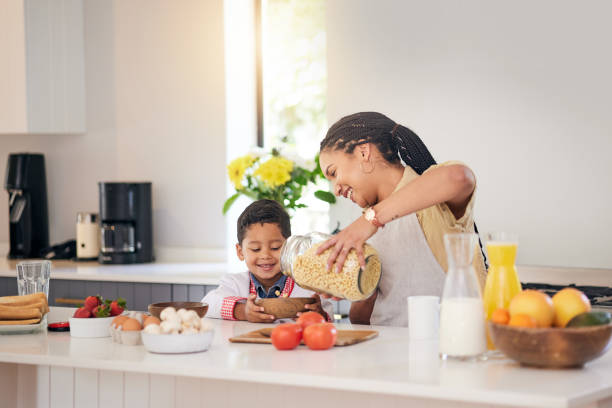
You may not be aware, but your kitchen’s best helpers are not your Thermomix as well as the air fryer; instead, they are the hands that are in another room tinkering away on Minecraft or tapping their fingers on TikTok.
It’s not just about dragging children to the kitchen, an effective method of getting them off devices, but it also speeds the pace of dinner with an efficient team of apprentices and sous chefs. In time, the food will arrive at the table faster, and more will be consumed.
If you’re planning to become a parent, making sure your kids are set up with the knowledge as well as the confidence isn’t only something that’s a “nice-to-have” but a need. Getting kids to the kitchen is about the hours they fly, and the earlier you can get them in the cockpit, the more successful you are.
Be sure to keep them secure yet also active.
Our responsibility as cooks is to act as your “grown-up eyeballs” until their brains have developed enough to detect risks, evaluate risks, and operate confidently. The earlier you start introducing your children in the kitchen, the more quickly this will happen. Sharp and hot are the two hazards that you’d like them to be aware of. They should first clearly say “HOT!” when they encounter a fire or when the oven tray is in your possession. “SHARP!” where knives or scissors are present.
However, this doesn’t mean they shouldn’t be kept away from sharp objects, however. As soon as they begin cutting at things, the quicker their skills improve. The memories I will cherish forever are the primary school-aged children I met in Tilba Tibia, which is situated on the southern coast of NSW, as I helped my buddy Paul West, host of River Cottage Australia, on his first salami-making workshop for the community. The kids were using chef’s knives with the skill of a pro. Their father asked me, who was a local postman, to explain how he had done it, and he replied: “Patience.” Then it was done. If you’re able to afford sufficient time as well as supervision earlier at the opposite end, you’ll be able to delegate cooking tasks to your enthusiastic apprentices.
Toddlers, babies, and preschoolers (0-4 to 4 years of age)
A baby in your body, or bouncing around in a bouncer, or a highchair in line of sight as you prepare for dinner is a great place to begin. Please provide them with a softer ingredient, like a floret of broccoli that has been blanched, for their sticky fingers to squash. This exposes them to the greens to cook dinner tonight while improving their fine motor abilities.
With the growing confidence in their independence, toddlers are enthralled by being like miniature sous chefs (“I do it and I’m doing it! !”). In accordance with their skill, allow them to mix and drain ingredients, like pod beans, or make use of safety scissors to cut soft herbs. Use an ice-cream knife or something simple to cut using a flat surface, such as a wedge of avocado or a lengthwise-halved cucumber, and watch their knife skills develop. At this point, giving them an understanding of their role when they cook is an excellent method to keep them entertained while also exposing them to things they’ll contact, which makes them more likely to consume.
You may be wondering whether it’s worth buying one of those towers for learning (a riser with rails that guard) at this point, to which I’d say no and yes. Yes, if there are many smaller tackers around, and having one “penned in” at the kitchen counter will give you security. If you believe you’ll be able to supervise more closely, you can make use of the fold-away step. The more confident youngsters can be seated on the kitchen table to enjoy a more expansive view.
The key for adults is to practice letting go of the result. The result could be somewhat more jumbled up than if you had done it yourself. But it was completed, and fostering confidence in the kitchen of your kids is more important than whether carrots are the perfect batons.
Elementary school-age (5-11 year old)
When children reach the age of school, their kitchens become the place for trial, testing, and experimenting without the worry of being judged. Give children tasks in the kitchen. They could be grinding ingredients with a box grated as they help fold dumplings, peeling vegetables to make soups, salads, or stews, as well as flipping pancakes or fritters.
Between 8 and 10 years old, your child might be in charge of dinner every week, preparing the ingredients needed as well as helping prepare the meal and if they’re capable and enthused enough to follow through with the cooking process and serving. With the advent of competitive cooking shows, the present generation is more familiar with “plating up” and “hero ingredients” than ever before. As adults, we are able to fill in the blanks by finding out what ingredients are currently in season, making use of every skerrick in the vegetable crisper, or repurposing leftovers.
The teenagers (12-17 to 17)
Though they might wish to be treated like mature adults, the teenager is like an artichoke. Beneath all the layers is a warm heart. The kitchen is often an ideal space for unconfrontational conversations and communication with a partner at the table.
Research has proven that there are many advantages to eating dinner as a whole family and that the meal doesn’t need to be lavish. Selecting a meal during the week that your teenager can cook and cook is a guaranteed method of expressing how much you feel about your child as an individual; however, it is not overt enough to cause the usual groans and eye rolls.
In the end, it’s not really an issue about “getting” kids into the kitchen. It is about “letting” them be there. Your children would like to remain where you are, and they’d like to feel like they’re being trusted with responsibilities because you trust them to be able to and that their contributions are appreciated.
Recipes you share will remain with them throughout their lives. The chicken caciatore you made with your mom or the masala dal your dad cooked up for you will be grandma’s and great-grandpa’s. The flavors of the kitchen, the sights and smells that emanate from the kitchen together will become the threads that tie families together and will leave unforgettable connections in the pages of oil-splattered paper and recipes that are written down in memory – along with the memories of links that will remain in the memory even after the last spoon is cleaned (incidentally it’s also a great task to give them).


